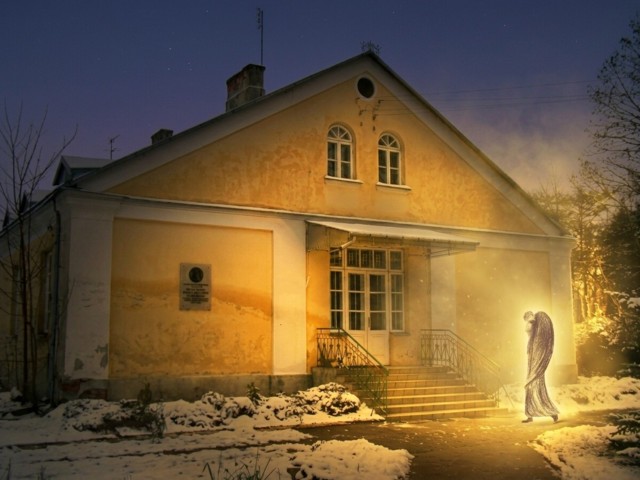
Angelas iš Pustelnikų / The Angel from Pustelnik
Žanras/genre: symphony
Instr.: full symph.orchestra
Perf.:
Ariant savo archyvo smėlynus aptinki visokių muzikinių archiologijų – tai kažkokie neaiškūs eskizai kažkokiam grandioziniam projektui, tai juokingi bandymai surasti nežinomų akordų faktūras, o čia – kažkokia senu Cubase surinkta partitūra be dinamikos ženklų ir t.t. ir ets ir pan. Daug kuo apsivalyti, išsilaisvinti nuo visokių bereikalingų apnašų ir iliuzijų. Deja, vis tikiesi, kad kažkam tie kažkas bus kažin kaip įdomūs. Bet tarp viso to šlamo randi ir visai smagių įdomybių. Viena jų – pirmoji baleto „Čiurlionis“ versija, kurią surašiau 2006 metais ir pavadinau „Angelas iš Pustelnikų“. Nepavyko tąkart tuo opusus sudominti NOBT, grįžau musę kandęs. Po kelių metų vėl beldžiausi į nacionalinio teatro duris. Tąkart partitūra liko teatre, bet atsakymas pasiekė tik po kelių metų, kai atvykęs į teatrą baleto trupės vadovu dirbti lenkas Krzysztofas Pastoras „rado“ lentynoje natas, susidomėjo ir nutarė tą baletą su lenkų kūrybine komanda Lietuvoje pastatyti. Taip gimė „Čiurlionis“. Bet ne vien apie tai čia kalbėtau. Atvėręs tos pirmos versijos natas radau jose keletą ilgesnio dėmesio vertų puslapių. Dar kartą perklausiau demo įrašą, atrinkau penkis epizodus ir sudėliojau simfoniją „Angelas iš Pustelnikų“. Dabar, kai pasibaigė MKČ jubiliejų pažymėjęs siautulys, galimas ramiu tonu grįžti prie tos dramatiškos lietuvių-lenkų-pasaulio kultūroje savitą brydę palikusios figūros. Toks post-jubiliejinis nuotykis. Netgi ne-grįžimas, o penkių klausimų įmetimas: MKČ – kas? – kodėl? – kam? – kiek? – kur? Jubiliejų šventę gal į kurį ir atsakė, nors rodė daugiau save, nei mūsų santykį į MKČ ir per jį – į mūsų kultūrą. Ir aš tame tarpe, kaip gi kitaip. Užkratas buvo toks stiprus, kad sveikas protas liko už emocijų geldos sienelių. Dabar, vartydamas tas senas baleto natas pagaunu save, kad tie penki klausimai atviri ir dabar, ir vien bandymas į juos atsakyti vėl juos visu ūgiu stato. Tad sėsdamas prie iš to atmesto baleto ištrauktos muzikos ir dėliodamas penkių dalių simfoniją, neturiu jokių iliuzijų kažkokiu stebuklingu būdu į tą klausimų kvintetą atsakyti. Tiesiog dar kartą garsais svarstau, kas tokie esame, kodėl tokie, kam visa tai, kiek gi visa tai tęsis ir kur busime nuvesti ar patys nusivedę išmintį užstatę lombarde. Suprantu, kad dabar ne motais tokie nereikalingi vartotojui dalykai, bet gi ne visiems – ne-motais! Man, pvz., visai motais ir tame randu motyvaciją kitos dienos ilgesiui. O jos bėga.
Plowing through the sands of your own archive, you stumble upon all kinds of musical archaeology: vague sketches for some grand project, amusing attempts to discover textures of unfamiliar chords, or a score put together on an old version of Cubase—completely devoid of dynamic markings, and so on and so forth. Plenty to clean up and free oneself from—all sorts of unnecessary buildup and illusions. Yet sadly, you still hope that those „somethings” might somehow be of interest to someone. But among all that clutter, you also find a few genuinely fun curiosities.
One of them is the very first version of the ballet Čiurlionis, which I wrote back in 2006 and titled The Angel from Pustelnik. Back then, I failed to pique the interest of the Lithuanian National Opera and Ballet Theatre (LNOBT) with that opus and returned empty-handed. A few years later, I knocked on the national theatre’s door once again. That time, the score remained at the theatre, though an answer only came years later when the Polish choreographer Krzysztof Pastor arrived to lead the ballet troupe. He „found” the sheet music on a shelf, took an interest, and decided to stage the ballet in Lithuania with a Polish creative team. That is how Čiurlionis was born.
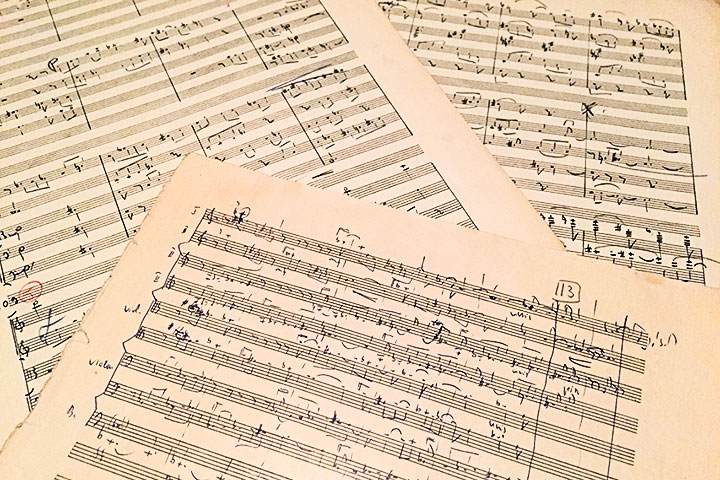
But that is not all I wanted to talk about. Opening the score of that first version, I found several pages worthy of deeper attention. I listened to the demo recording once again, selected five episodes, and put together the symphony The Angel from Pustelnik. Now that the frenzy celebrating the M. K. Čiurlionis anniversary has quieted down, it is possible to return in a calm tone to this dramatic figure who left such a distinct mark on Lithuanian, Polish, and world culture. A post-anniversary adventure of sorts. Not even a return, but rather tossing out five questions: M. K. Čiurlionis—Who? Why? For whom? How much? Where to?
Those who celebrated the anniversary might have answered some of these, though they mostly showcased themselves rather than our relationship to MKČ and, through him, to our own culture. Myself included, of course—how could it be otherwise? The infection was so strong that sound judgment was left stranded behind the walls of emotion. Now, turning through those old ballet pages, I catch myself realizing that those five questions remain just as open today, and merely trying to answer them brings them back up at full height.
So, sitting down with the music pulled from that rejected ballet and constructing a five-movement symphony, I harbor no illusions of miraculously answering this quintet of questions. I am simply reflecting once more through sound on who we are, why we are this way, what all of this is for, how long it will go on, and where we will end up—or lead ourselves—having pawned our wisdom. I understand that such things, completely useless to a consumer, are irrelevant to many right now. But not to everyone! To me, for instance, they are very relevant, and in that I find motivation for longing for tomorrow. And the days are running by.
Natos
Failai parsisiuntimui
Giedrius Kuprevičius / simfonija „Angelas iš Pustelnikų” / Natos bus įkeltos ateityje
Audio
Giedrius Kuprevičius / symphony „The Angel from Pustelnik”, 3.Andante doloroso / 2006-2026 / demo