

Žanras/genre: instrumental cycle
Instr.: pf
First perform.: Giedrius Kuprevičius, 1986
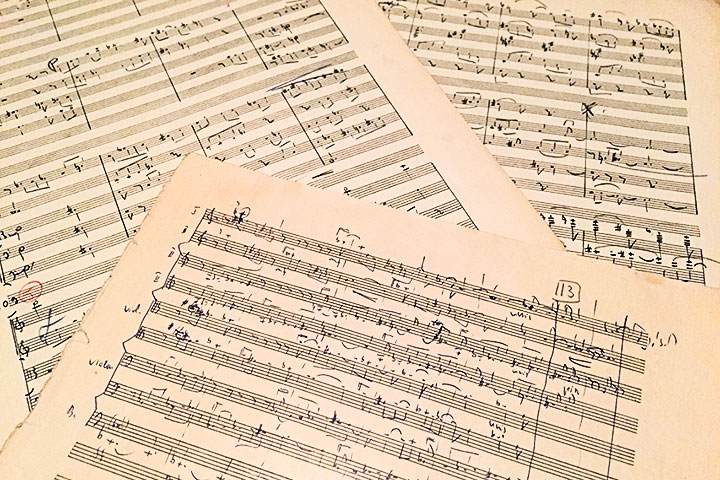
Kiekvieno kompozitoriaus kūrybos kišenėse rasime užsimetusių kūrinių, tokių, kurie jam atrodė svarbūs ir įdomūs, gi tikrovėje taip ir nepradėję savarankiško gyvenimo. Vienas tokių – 1986 metais užgimęs 23 miniatiūrų ciklas „Šis tas iš F.P. gyvenimo“. Atverčiau aplanką su natomis, senomis iškarpomis iš periodikos su išimtinai negatyviais žinovų atgarsiais. Tačiau yra keli niuansai. Ciklą inspiravo du momentai: pirmas – dešimtmetį trukęs darbas su elektroniniais muzikos instrumentais, įgalinęs kiek kitaip įvertinti ir fortepijono akustines galimybes. Antras – noras „pačiupinėti“ įvairias muzikines stilistikas ir sroves. Tad šalia elektroninės muzikos sukeltų ypatumų atsirado ir ironijos, žaismės ir dalinio absurdo elementai, atkeliavę iš fluxus ir dadaizmo estetikos bei metodų. Įsivaizdavau fortepijoną kaip elektroninį tembrus gaminantį padarą, turintį savo sudėtingą ir įvairialypį gyvenimą. Gi iš žaismių – nei vieno klausytojo ir vertintojo nepastebėta pabaigoje ciklo atlikimo mano perskaityta literatūrinė inspiracija – pastraipa iš Marcelio Prousto romano „Prarasto laiko beieškant“, kurioje fortepijonas, klavišai gretinami su žmogaus gyvenimu, jausmais, būtimi, žvelgiant į muzikos suvokimą žymiai platesne, vos ne globaline prasme. Tasai tekstas visas miniatiūras sugrojus buvo mano skaitomas publikai:
„…Ir tapo jam aišku, kad tai keičia sampratą apie muzikos kūrinio plokštumą, kad muzikanto kūrybinių galimybių laukas – ne vien skurdi kelių pasikartojančių tonų klaviatūra, o begalybė nežinomų, išskaidytų ir neištyrinėtų erdvių klaviatūra, kurioje atrasti ne-kurie iš milijonų klavišai atspindi švelnumą, aistrą, drąsą, naujumą, kiekvienas nepanašus į kitą, kaip nepanašios dvi visatos, ir kurie padeda mums pajusti, kokia begalinė įvairovė slypi neaprėpiamoje, neištirtoje ir paslapties kupinoje žmogaus sielos nakty, klaidingai įsivaizduotoje esant tuščia erdve ar nebūtim…“ [cit. iš Marcel Proust epinio romano „Prarasto laiko beieškant“ / “À la recherche du temps perdu“ pirmosios dalies „Svano pusėje“ / “Du côté de chez Swann“, konkrečiai – iš skyriaus „Svano meilė“ / “Un amour de Swann“].
Deja, visi nuo to mano grojimo buvo pervargę ir nesuvedė į visumą to teksto, fluxinių išdaigų, o viena po koncerto prie manęs priėjusi klausytoja nelauktai paklausė: – Kas slypi po raidėmis F ir P, kieno gyvenimą jūs turėjote galvoje? Atsakiau: – Filomena Pralinksmaitė, gerbiamoji. Dar ketino klausti, kas ji tokia, bet mane užkalbino kiti klausytojai.
Tad retsykiais prisimindamas tuomet spaudoje „pretenzingai pavadintu kūriniu“ įvardintą ciklą, vis galvoju – kiek mūsų kišenėse darbelių, kurie tūno tylūs, bet saugūs.
In the pockets of every composer’s creative output, we find pieces tucked away—works that once seemed important and interesting to them, yet never truly took on a life of their own. One such work is the 1986 cycle of 23 miniatures, Something from the Life of F.P. I opened the folder containing the sheet music and old periodical clippings featuring overwhelmingly negative reviews from critics. However, there are a few nuances to consider. The cycle was inspired by two factors: first, a decade-long engagement with electronic musical instruments, which allowed for a different appreciation of the acoustic capabilities of the piano; and second, a desire to „test the waters” of various musical styles and currents. Thus, alongside traits prompted by electronic music, elements of irony, playfulness, and partial absurdity emerged—drawn from the aesthetics and methods of Fluxus and Dadaism. I imagined the piano as an electronic, timbre-producing creature with a complex and multifaceted life of its own.
As for the playful touches—completely overlooked by every listener and critic—there was a literary inspiration read aloud by me at the very end of the cycle’s performance: a passage from Marcel Proust’s novel In Search of Lost Time, which compares the piano and its keys to human life, emotions, and existence, viewing the perception of music in a much broader, almost global sense. Once all the miniatures had been played, this text was read by me to the audience:
„…And it became clear to him that this changes the conception of the flatness of a musical work, that the field of a musician’s creative potential is not merely the meager keyboard of a few repeating tones, but a keyboard of infinite unknown, fragmented, and unexplored spaces, where certain keys discovered among millions reflect tenderness, passion, courage, novelty—each unlike the other, just as two universes are never alike—and which help us feel what an infinite variety lies hidden within the boundless, uncharted, and mystery-filled night of the human soul, mistakenly imagined to be an empty space or non-existence…” (quoted from the first part, Swann’s Way / Du côté de chez Swann, of Marcel Proust’s epic novel In Search of Lost Time / À la recherche du temps perdu, specifically from the section „Swann in Love” / Un amour de Swann).
Alas, whether everyone was already exhausted by my playing and failed to connect the text into a cohesive whole with the Fluxus-esque pranks, a listener approached me unexpectedly after the concert and asked: — „And what lies behind the letters F and P? Whose life did you have in mind?” I replied: — „Filomena Pralinksmaitė, my dear.” She was about to ask who she was, but other concertgoers interrupted me.
And so, occasionally recalling this cycle—once labeled in the press as a „pretentiously titled work”—I often think: how many small works do we keep in our pockets, lying silent yet safe?
Natos
Failai parsisiuntimui